
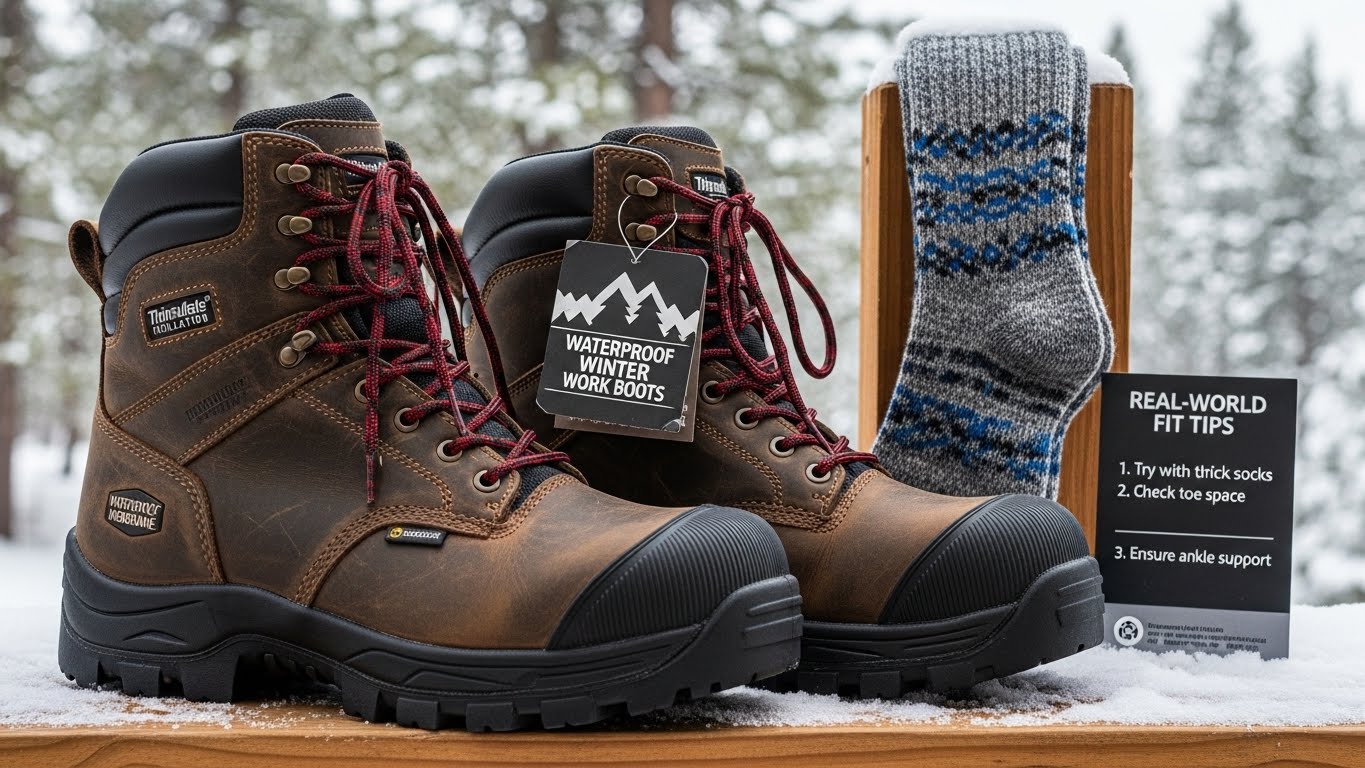

Winter work boots are a different game than regular waterproof boots. If you’re outside, in a cold warehouse, or bouncing between snow, slush, and wet concrete, you need three things working together:
- Warmth that lasts past hour 2
- Traction that doesn’t skate on packed snow
- A fit that stays comfortable when your feet swell (and when you wear thicker socks)
Below are four winter-ready waterproof work boots worth considering, plus the fit tips that help you avoid the #1 mistake: buying the wrong size for winter conditions.
What Actually Matters in a Winter Waterproof Work Boot
Warmth (insulation + liner > “looks thick”)
- Insulated lining and a wind-blocking upper matter more than a bulky look.
- If a boot lists a temperature range (example: 0°F–20°F), treat it as a guideline—your warmth depends on activity level and socks.
Waterproofing (seams + gusseted tongue)
- “Waterproof” works best when the boot has sealed seams and a gusseted tongue (keeps slush from sneaking in around the laces).
Traction (lug depth + rubber compound)
- For snow/slush: look for deeper lugs and wide channels that shed packed snow.
- For icy parking lots: traction helps, but no boot is magic—move to microspikes if you’re regularly on ice.
Fit (winter sizing is different)
- You usually need a little more toe room to keep circulation (warmth) and to accommodate thicker socks.
1) NORTIV 8 Men’s Insulated Waterproof Work Boot (Rubber Sole)
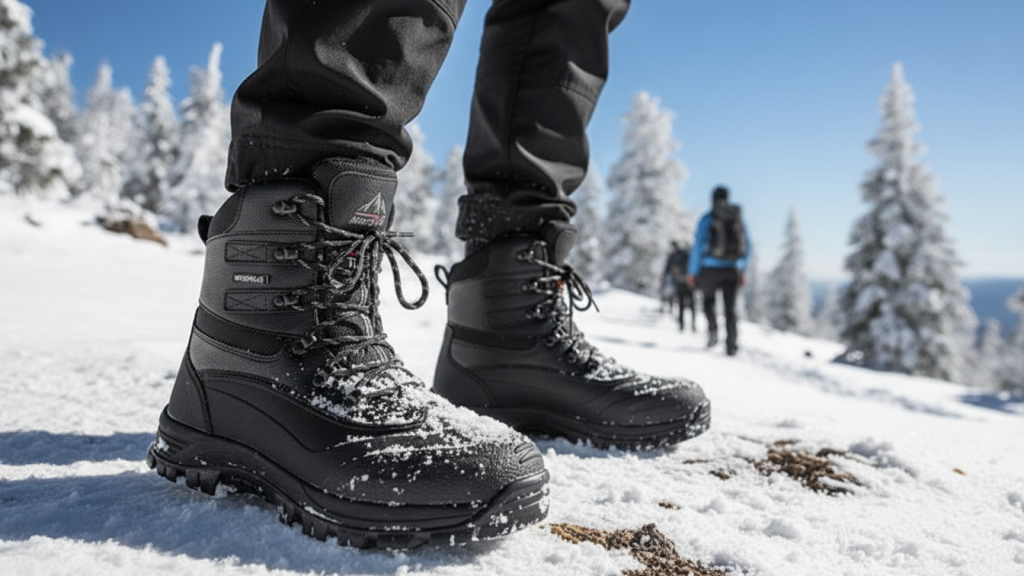
A practical pick when you want a classic winter work boot that balances warmth + waterproofing + everyday durability without going overboard on price. The rubber-sole style is a plus for slushy conditions.
Best for
- Outdoor chores, job sites, general winter work
- People who want a dependable “daily winter boot” feel
Strengths
- Insulated build that works well for typical winter temps
- Rubber outsole tends to perform better in wet slush than harder compounds
Watch-outs
- If you’ll be standing still for long periods in deep cold, you may want a higher warmth spec and thicker liner
2) ANGRYRAM Winter Steel Toe Boots (Waterproof, Warm)
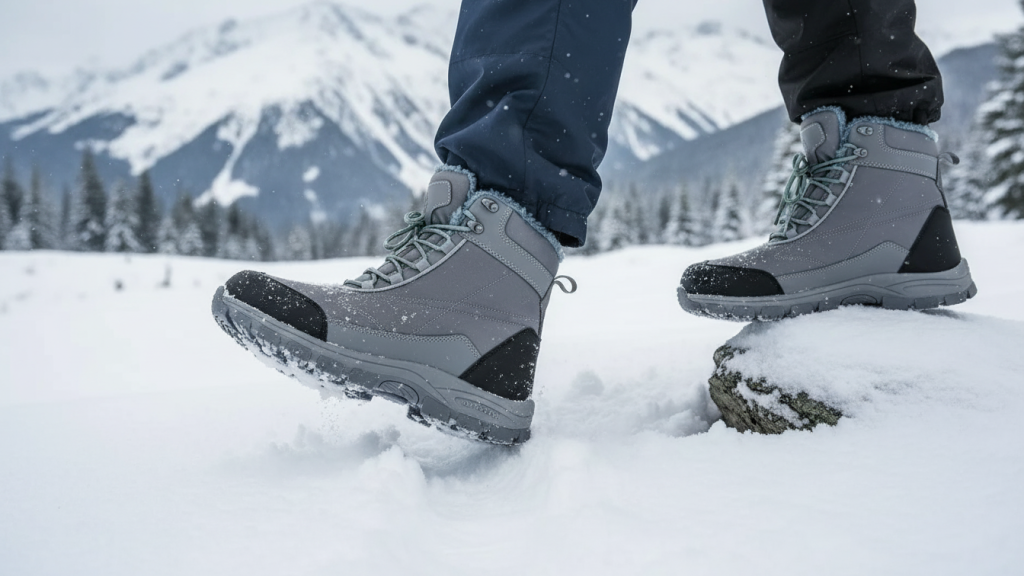
If you need toe protection in winter conditions, this is the type of boot that makes sense: steel toe plus winter waterproofing for messy sites.
Best for
- Work environments that require a safety toe
- Cold, wet days where you still need jobsite protection
Strengths
- Steel toe protection for impact risk
- Waterproof + warm-focused design for winter work
Watch-outs
- Steel toe can feel colder than composite in some conditions (sock choice matters a lot)
- Weight can add fatigue if you walk 15k–20k steps/day
3) ALEADER Men’s Winter Waterproof Insulated Boot (Warm Inner)
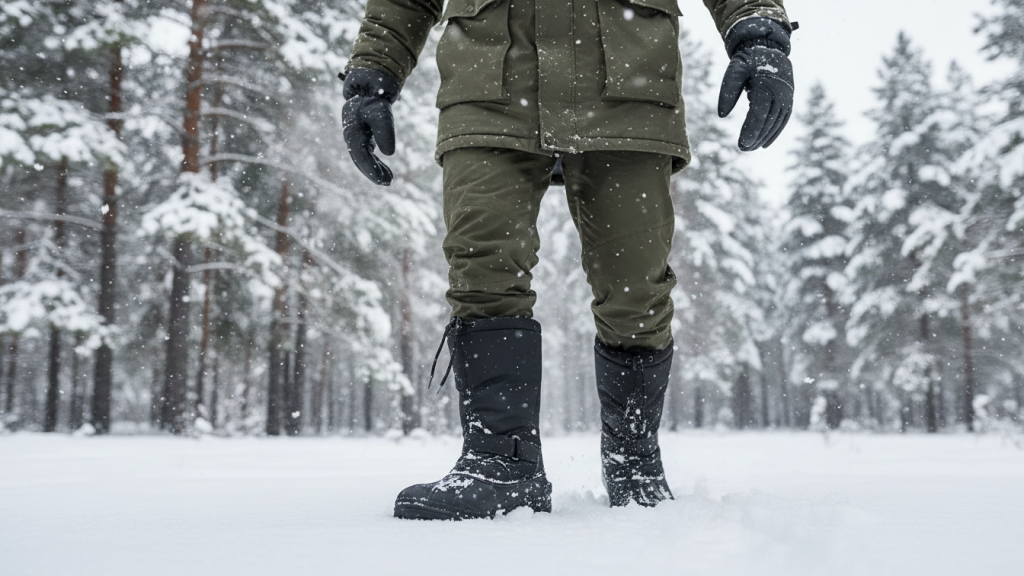
This style is ideal if your priority is all-around winter comfort: warm inner lining, waterproof protection, and a build that works for long wear. If you want one pair to cover most winter work situations, this is usually the “safe” direction.
Best for
- Long shifts in cold/wet weather
- People who want a comfort-first winter boot without giving up traction
Strengths
- Warm inner lining that feels noticeably cozier for prolonged wear
- Good balance of comfort + winter protection
Watch-outs
- If your job requires a safety toe, confirm whether you need steel/composite protection instead
4) Hunthor Steel Toe Work Boots (0°F–20°F Cold Weather, Waterproof)
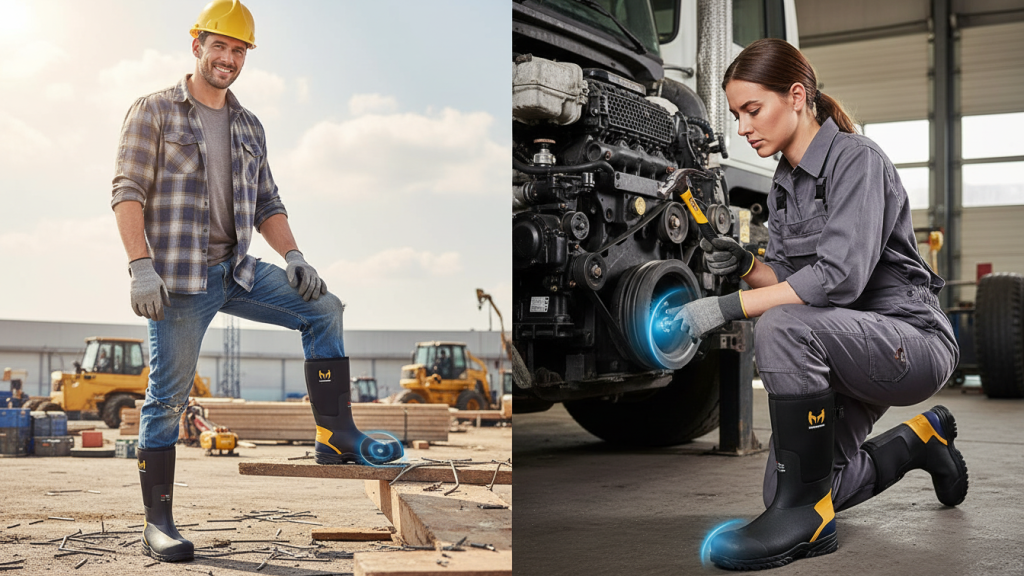
If you work in real winter temps and need protection, this option is aimed at colder conditions (with a stated cold-weather range) plus safety toe.
Best for
- Colder climates and outdoor work
- Jobs that require safety toe in winter
Strengths
- Cold-weather focus for harsher conditions
- Safety toe + waterproof build
Watch-outs
- Like most safety-toe winter boots, expect more weight and bulk
- If you’re mostly indoors and walking a lot, a lighter boot may feel better
Which One Should You Choose?
Best all-around winter comfort (most people)
✅ ALEADER Winter Waterproof Insulated Boot
A strong balance of warmth, waterproofing, and comfort for long wear.
Best value winter work boot (no safety-toe requirement)
✅ NORTIV 8 Insulated Waterproof Work Boot
Reliable “daily winter boot” performance for slush, snow, and wet ground.
Best if you need a safety toe
✅ Hunthor Steel Toe (colder-weather focus)
or ✅ ANGRYRAM Winter Steel Toe
Pick based on which fits your climate and shift demands best.
Real-World Fit Tips (This Is Where Most People Mess Up)
1) Try them with winter socks
Use the socks you’ll actually wear at work—thicker socks can change your size.
2) Leave toe wiggle room
Cold feet get worse when toes are cramped. You want space without heel slip.
3) Heel lock matters more than tight forefoot
If your heel slides, you’ll blister. If you over-tighten the forefoot, you’ll lose warmth.
4) Break-in plan for stiff winter boots
Wear them around the house or on a short shift first. Winter boots often feel stiff until they loosen.
5) Insoles can upgrade warmth + comfort
A supportive insole plus a cushioned sock can reduce fatigue and keep feet warmer by improving circulation comfort.