
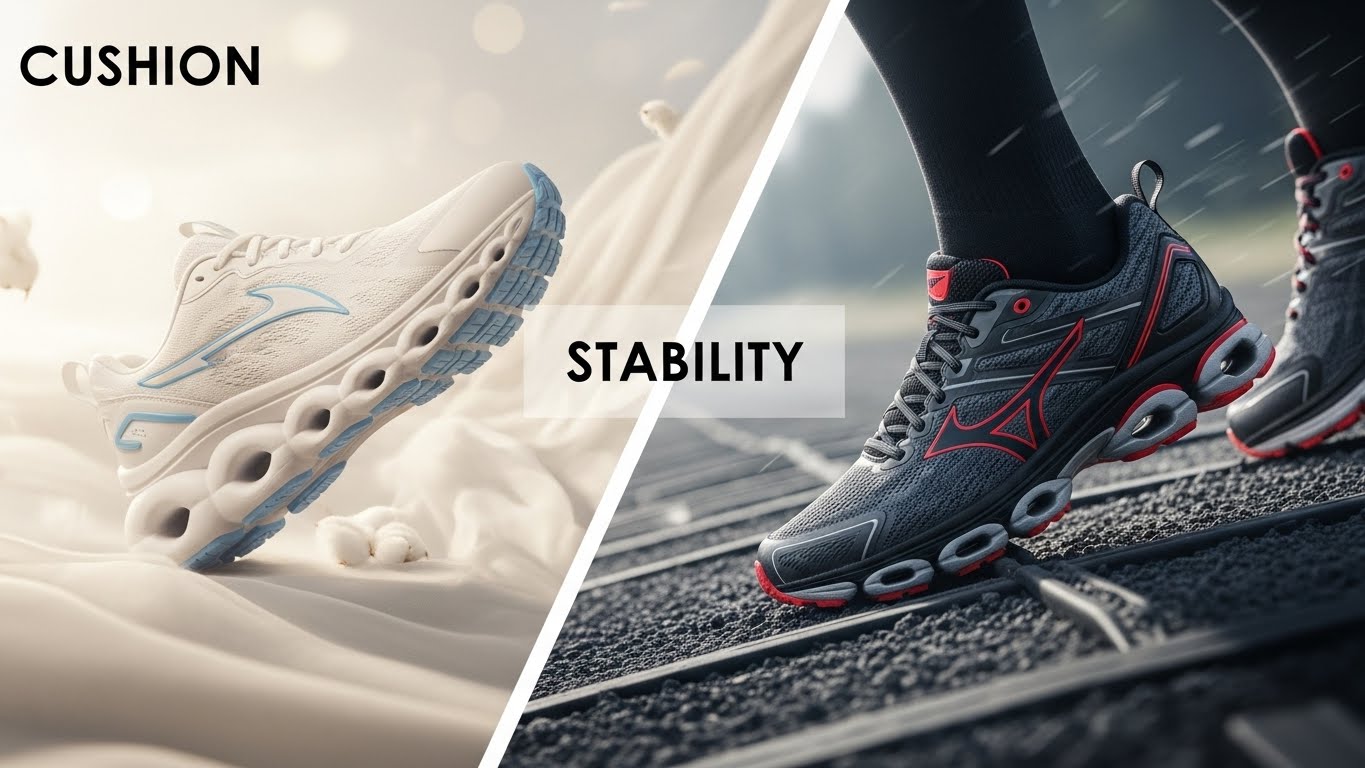

Choosing the right running shoe isn’t about trends or brand loyalty—it’s about how you move. Cushion and stability running shoes serve very different purposes, and wearing the wrong type can quietly lead to discomfort, fatigue, or even injury over time.
If you’ve ever wondered why some shoes feel “soft but unstable” while others feel “supportive but stiff,” this guide will help you decide which one truly fits your stride.
Cushion vs Stability Shoes: What’s the Real Difference?
At first glance, running shoes may look similar—but what’s happening under your feet makes all the difference.
- Cushion running shoes focus on shock absorption and comfort
- Stability running shoes focus on motion control and support
The right choice depends on your gait, foot shape, and running habits, not just comfort in the first five minutes.
1. Cushion Running Shoes – Built for Comfort
View on Amazon
What Cushion Shoes Are Designed For
Cushion running shoes prioritize impact absorption. They use softer midsoles (like Fresh Foam or DNA Loft) to reduce stress on joints, especially during long walks or runs.
Best For
- Neutral runners
- Walkers and casual joggers
- People with joint sensitivity
- Long hours on your feet
Fit & Feel
- Soft underfoot
- Flexible forefoot
- Natural foot movement
Pros
- Extremely comfortable
- Great for long-distance comfort
- Less foot fatigue
Cons
- Limited support for overpronation
- Can feel unstable for some runners
Real User Insight
If your feet land straight and you value comfort over structure, cushion shoes feel natural and forgiving—even after hours of wear.
2. Stability Running Shoes – Built for Control
View on Amazon
What Stability Shoes Are Designed For
Stability shoes help guide your foot motion, especially if your feet roll inward excessively (overpronation). They use firmer foam, support rails, or structured midsoles.
Best For
- Overpronators
- Runners with knee or arch pain
- Heavier runners
- Long-distance runners needing consistency
Fit & Feel
- Firmer underfoot
- Secure heel lockdown
- Structured midfoot
Pros
- Better injury prevention
- Improved alignment
- Consistent stride control
Cons
- Heavier than cushion shoes
- Less flexible
- May feel stiff for casual wear
Real User Insight
Stability shoes may not feel “soft,” but over time they reduce pain and fatigue—especially in knees and arches.
3. Cushion vs Stability: Side-by-Side Comparison
View on Amazon
| Feature | Cushion Shoes | Stability Shoes |
|---|---|---|
| Comfort | ⭐⭐⭐⭐⭐ | ⭐⭐⭐⭐ |
| Support | ⭐⭐⭐ | ⭐⭐⭐⭐⭐ |
| Flexibility | High | Medium |
| Injury Prevention | Moderate | High |
| Best Use | Walking, casual runs | Long runs, overpronation |
4. Which One Fits Your Stride?
View on Amazon
Ask yourself these questions honestly:
- Do your shoes wear out faster on the inside edge? → Stability
- Do you feel knee or arch pain after runs? → Stability
- Do you just want soft comfort for walking or light jogging? → Cushion
- Do you stand or walk all day? → Cushion
Your stride matters more than how the shoe feels in-store.
5. The Optimal Choice: Comfort vs Control
View on Amazon
Best Overall for Most People
👉 Cushion running shoes
If you’re a casual runner, walker, or on your feet daily, cushioning delivers comfort without overcorrecting your natural motion.
Best for Injury Prevention
👉 Stability running shoes
If you run regularly, have alignment issues, or experience recurring pain, stability shoes are the smarter long-term choice.
Honest Final Review (Real-User Perspective)
Many runners make the mistake of choosing shoes based on softness alone. Cushion shoes feel amazing at first—but if your stride needs support, that comfort won’t last.
On the other hand, stability shoes may feel firm initially, but they often solve problems you didn’t know your feet had.
👉 The best shoe isn’t the softest or the most expensive—it’s the one that keeps your stride efficient, pain-free, and consistent.