
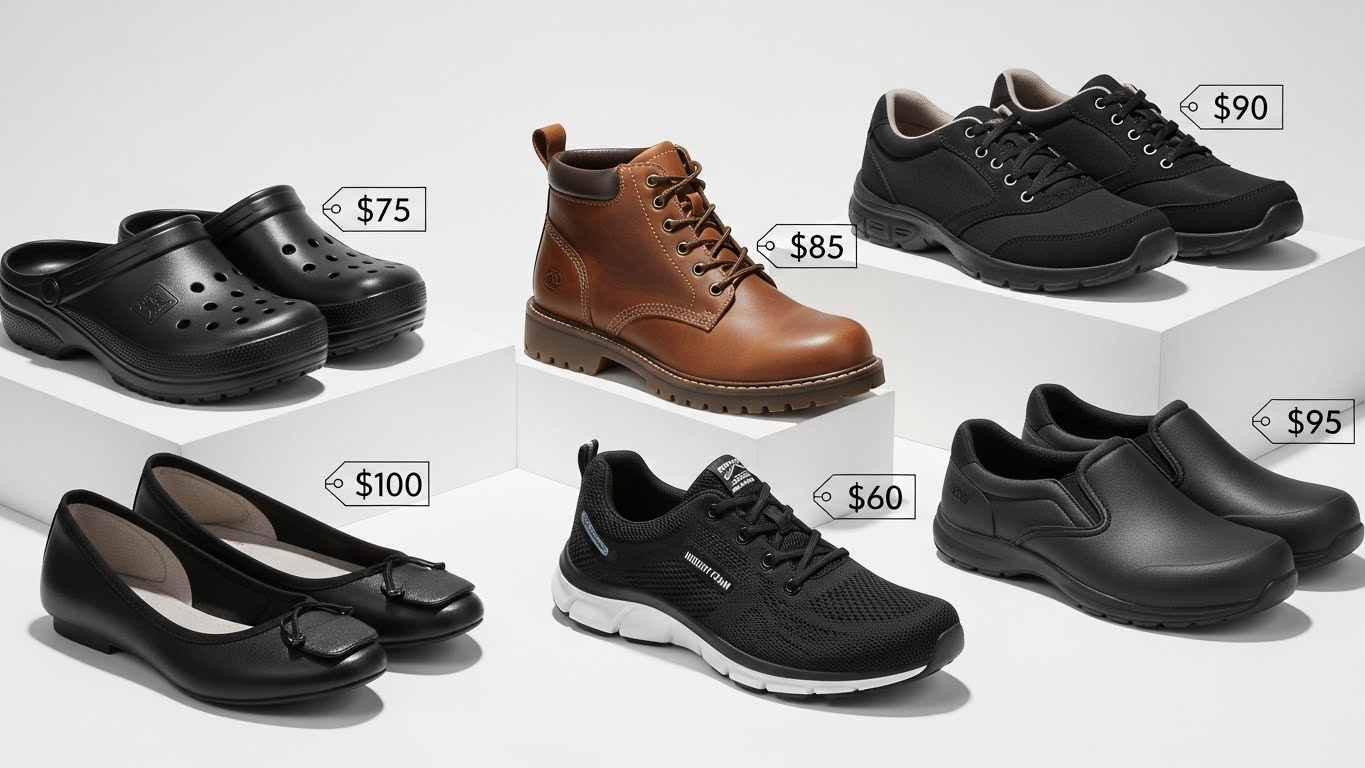

If you’re working 8–12 hour shifts—especially on concrete—“comfortable” isn’t just about soft padding. The pairs that actually feel good late into the day usually nail three things:
- Cushion + stability (so your feet don’t collapse inward)
- A secure fit (no heel slip, no toe squeeze)
- A supportive insole/midsole combo (so you’re not bottoming out by hour 3)
Below are five work-shoe picks that stay comfortable under real shift conditions, with quick guidance on who each one fits best.
Quick Picks
- Best for slippery restaurant floors: Skechers Max Cushioning Elite SR
- Best hands-free comfort for women (easy on/off): Skechers Hands Free Slip-ins A-Wedge
- Best for toe protection + all-day wear: KEEN Utility Flint 2 Mid (Steel Toe)
- Best budget steel-toe sneaker feel: Skechers Cankton Ebbitt (Steel Toe)
- Best for light-duty work + everyday wear: Columbia Newton Nimble Leather
What I Look For in Comfortable Work Shoes (Under $100)
- Midsole that doesn’t flatten fast – cushion is great, but stability matters more over long shifts.
- Toe room + heel lock – toes should spread; heel shouldn’t rub.
- Outsole grip – especially for food service, wet floors, and quick pivots.
- Weight – heavier boots can feel “protective,” but fatigue builds over time.
- Insole upgrade potential – some shoes become dramatically better with a supportive insole.
1) Skechers Women’s Relaxed Fit Max Cushioning Elite SR (Slip-Resistant Work Shoe)
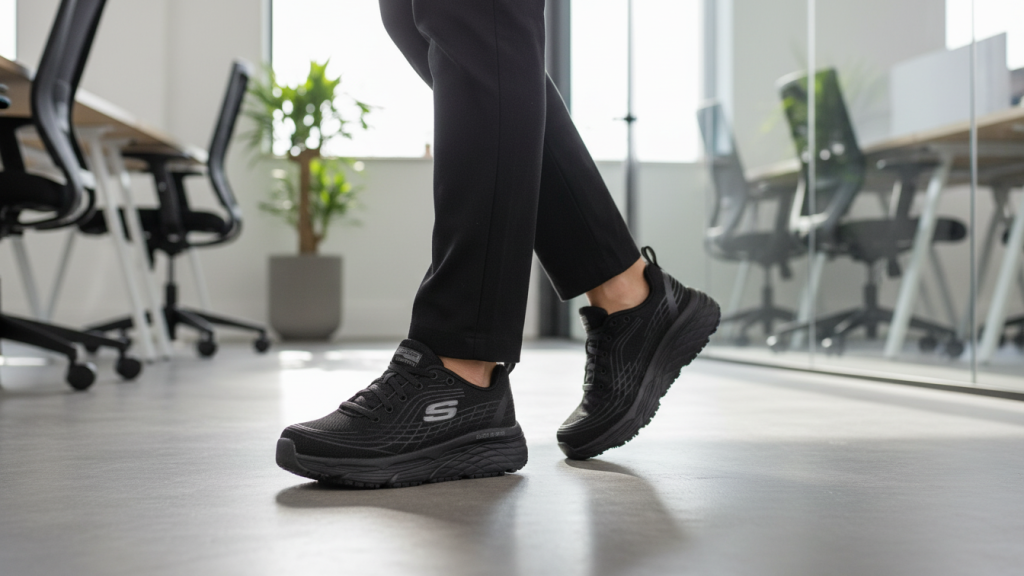
This is the comfort-first pick when you’re on your feet all day and need reliable traction. The “Max Cushioning” build tends to feel noticeably softer underfoot, and the SR (slip-resistant) outsole is the big reason it’s popular for food service and wet-floor environments.
Why it feels comfortable on long shifts
- Plush cushioning helps reduce heel pressure on hard floors
- Slip-resistant outsole helps you move confidently on slick surfaces
- Relaxed Fit styling is often more forgiving for slightly wider feet
Best for
- Restaurants, kitchens, hospitals, retail—any job with constant standing/walking
- Workers who prioritize comfort and grip over toe protection
Potential downside
- If you need a safety toe, move to a steel-toe option below
2) Skechers Women’s Hands Free Slip-ins A-Wedge (Crescent)
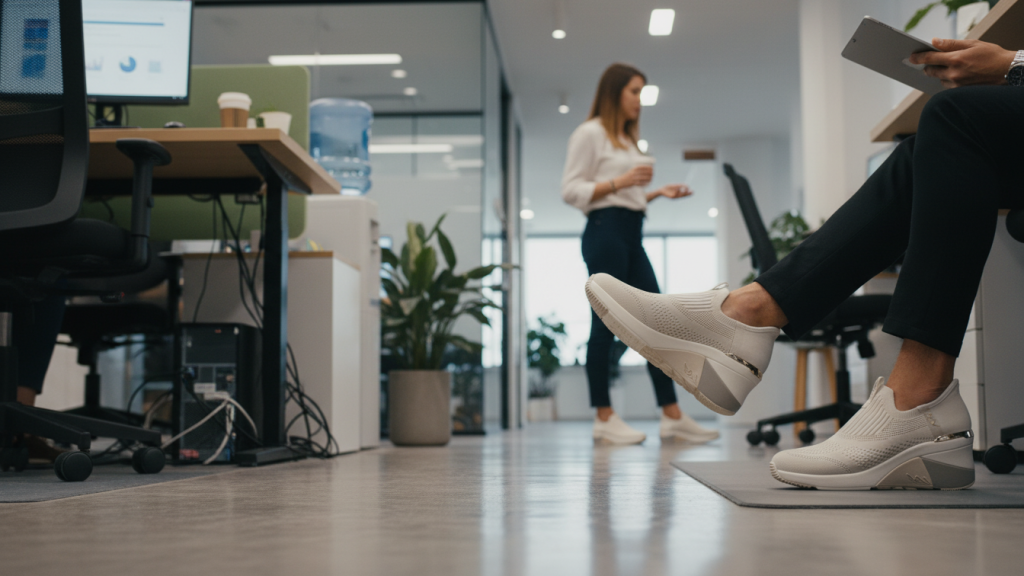
If you want comfort and you’re tired of bending down to put shoes on, a hands-free slip-in design can be a game changer. This style leans “work-friendly casual” and can be ideal for roles that involve lots of walking but don’t require safety-toe protection.
Why it works
- Hands-free entry is genuinely convenient during busy shifts
- Stable everyday platform that’s comfortable for walking-heavy jobs
- Great for quick on/off (commuting, running errands after work)
Best for
- Retail, hospitality, office/clinic settings, travel-heavy days
Potential downside
- Not the top choice for slippery kitchen floors unless the outsole is specifically rated for slip resistance
3) KEEN Utility Men’s Flint 2 Mid Height Steel Toe Work Boot
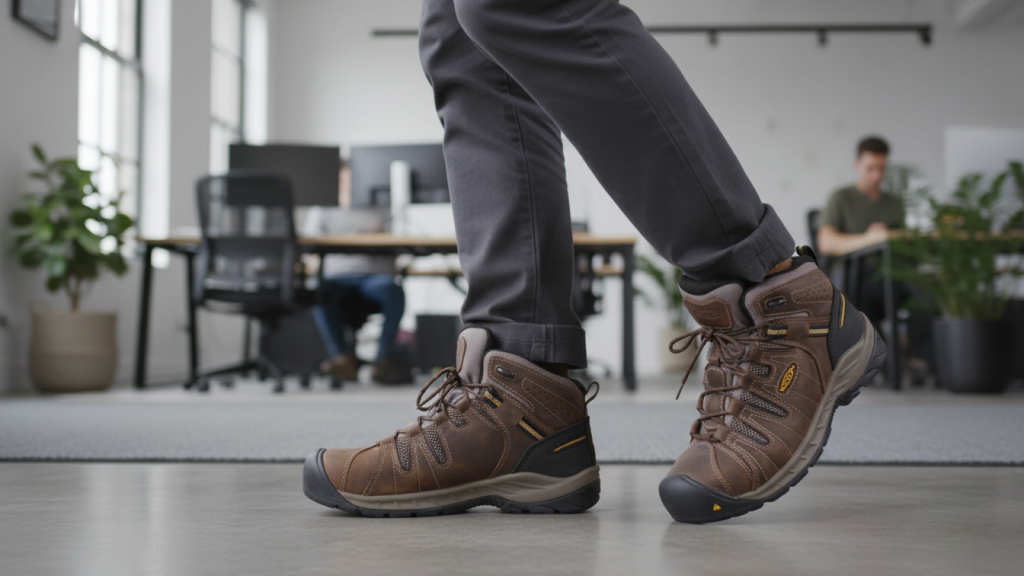
If you need toe protection but still want comfort, KEEN Utility models are often a safer bet than random “safety sneaker” listings. This one offers a more traditional work-boot structure with steel toe protection while staying wearable for long shifts.
Why it’s comfortable (for a steel toe)
- Supportive midsole and more structured build help reduce foot fatigue
- Mid-height design adds stability (helpful on uneven surfaces)
- Great option if you’re moving between indoor/outdoor tasks
Best for
- Warehouse, maintenance, construction light-to-medium duty
- Anyone who needs steel toe but still wants all-day comfort
Potential downside
- Steel toe adds weight—if you walk 15k–20k steps/day, consider cushioned socks and a supportive insole
4) Skechers Men’s Cankton Ebbitt Steel Toe Construction Shoe
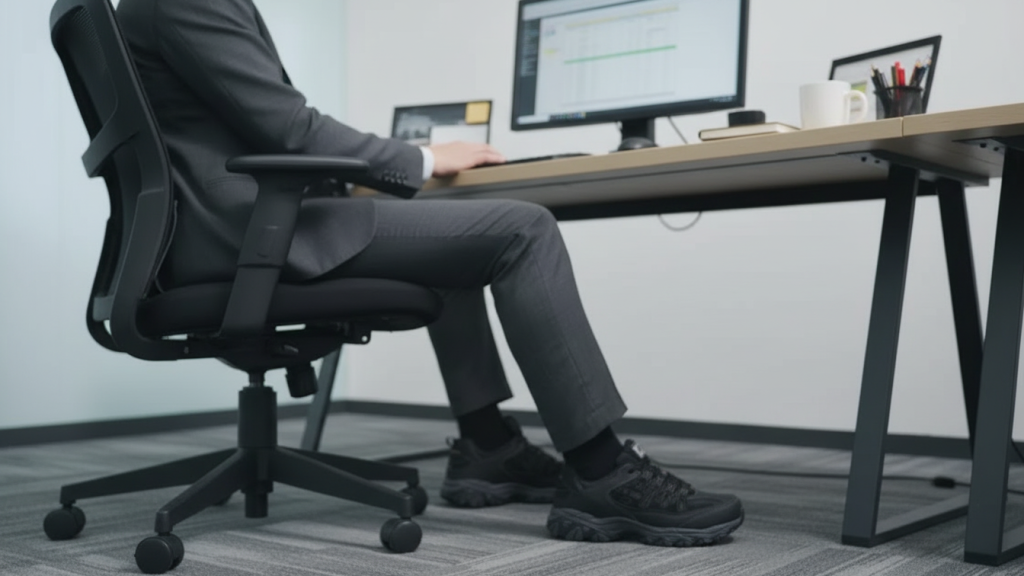
This is the “steel toe without the heavy boot vibe” option. It’s a good fit for people who want a sneaker-like feel with safety protection—especially for indoor job sites or warehouse work.
Why it’s a smart under-$100 pick
- Steel toe protection in a more athletic, wearable shape
- Comfortable for walking-heavy shifts compared to bulky boots
- Easy transition from work to everyday errands
Best for
- Warehouse, stockroom, delivery support, light construction
- Workers who want steel toe but prefer a shoe over a boot
Potential downside
- If you’re in deep mud, snow, or rugged outdoor environments, a higher-boot outsole may grip better
5) Columbia Men’s Newton Nimble Leather
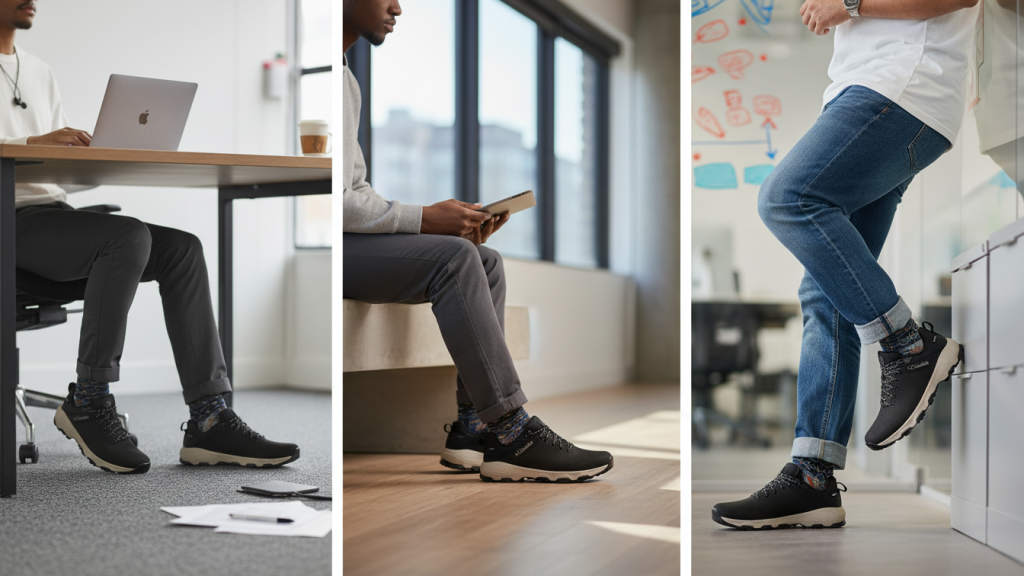
A clean leather work-casual option that works well for people who want something comfortable and durable for light-duty jobs or professional settings where you still walk a lot.
Why people like it
- Leather upper gives a more polished look
- Comfortable for long walking days and commuting
- A solid “one pair does most things” choice
Best for
- Light-duty work, property/office tasks, travel, everyday wear
Potential downside
- Not a safety-toe shoe; not the best option for slippery kitchens unless you confirm outsole grip needs
Best Overall Comfort Picks
- Best for standing all day + slip resistance: Skechers Max Cushioning Elite SR
- Best safety-toe comfort under $100: KEEN Utility Flint 2 Mid Steel Toe
- Best steel-toe “sneaker feel” value: Skechers Cankton Ebbitt Steel Toe
Comfort Setup That Makes Almost Any Work Shoe Better
- Wear cushioned work socks (thicker heel + forefoot)
- Add a supportive insole if you have:
- heel pain → deep heel cup
- flat feet/overpronation → arch support
- concrete floors all day → extra cushioning
- If you’re between sizes, many workers do best with ½ size up (especially with thicker socks)
FAQ
Do I need steel toe?
Only if your job requires it or you’re around heavy objects, pallets, tools, or machinery. Steel toe adds weight, but it can be worth it for safety.
What’s the #1 cause of foot pain in work shoes?
Poor fit (toe squeeze or heel slip) and midsoles that flatten quickly. Comfort isn’t just “soft”—it’s support + stability.
Should I buy slip-resistant if I’m not in food service?
If you ever deal with wet floors, cleaning, rain, or smooth tile, slip resistance is still a smart upgrade.